Japanese Gardens: Japanese Agricultural History in the Yakima Valley
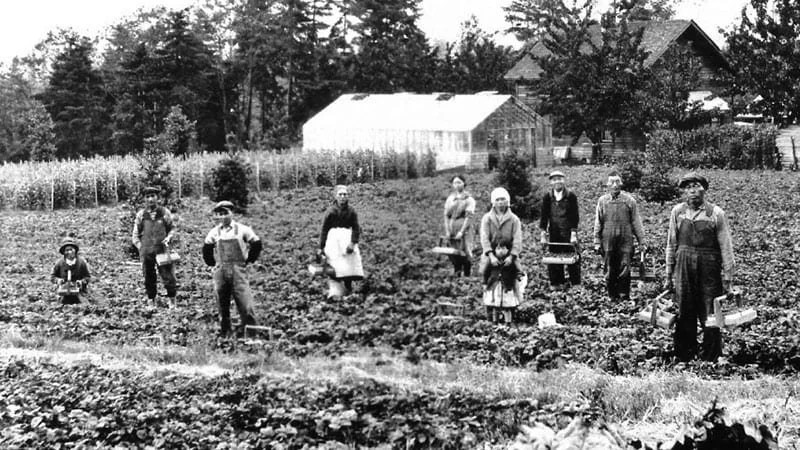
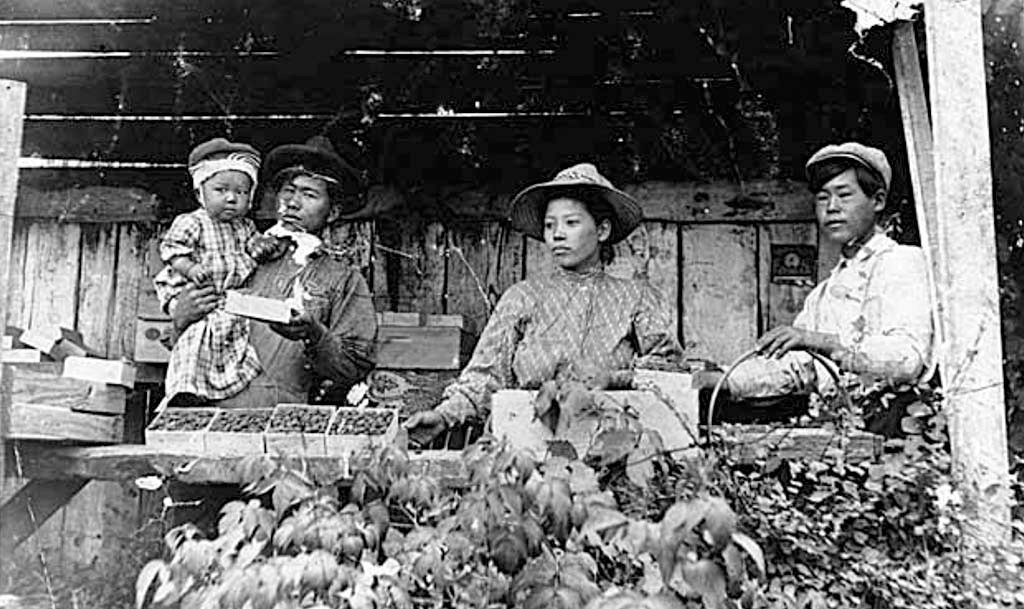
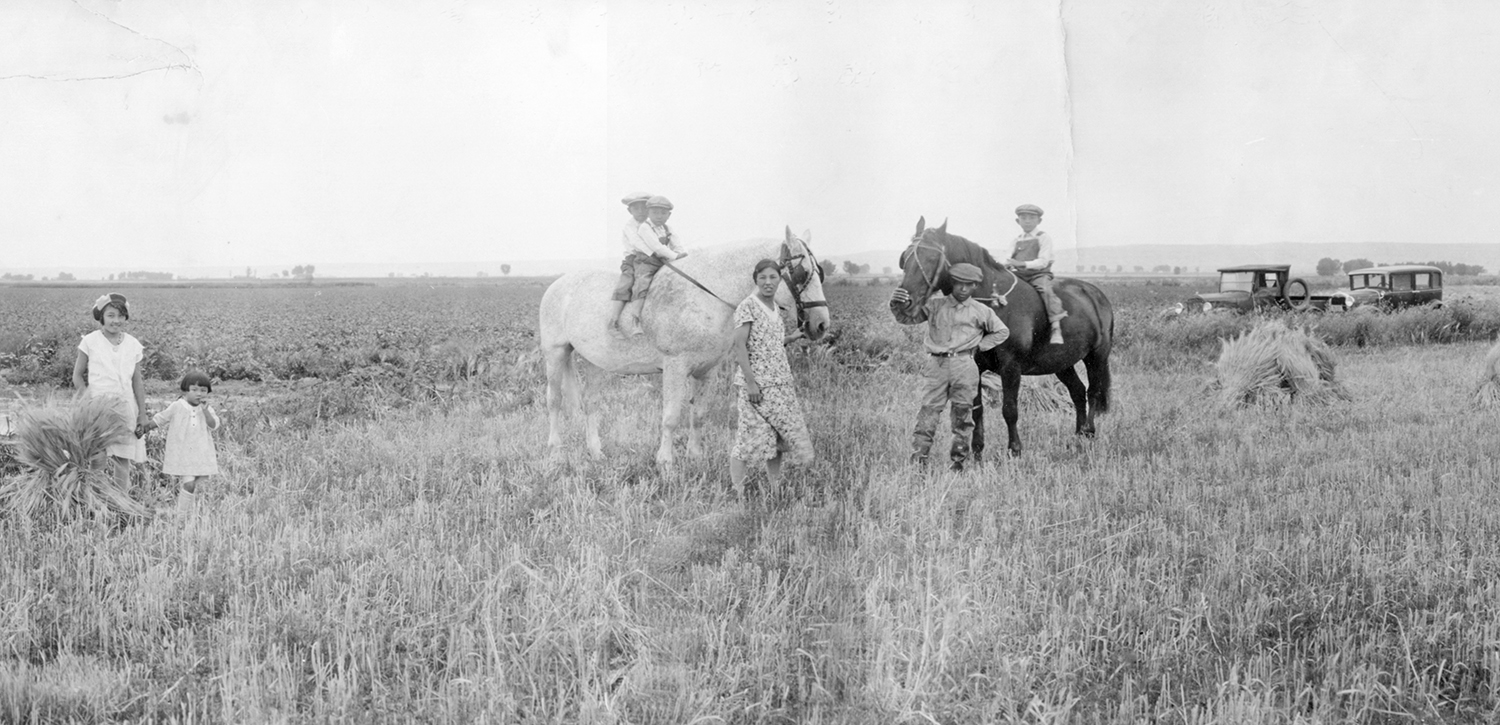
In the heart of Central Washington, the Yakima Valley has long been celebrated for its agricultural bounty. Yet within the lush green of orchards and fields lies a lesser-known story of resilience, innovation and transpacific exchange—one shaped by fifty years of Japanese immigration, labor and transformation. The first Japanese to cross the Cascade Mountains found an arid landscape of sagebrush and extreme temperatures.[1] These immigrants transformed thousands of acres of arid sagebrush to productive agricultural land and provided a valuable labor source for the Yakima Valley. The Japanese community in the Yakima Valley flourished despite prejudice until their removal and relocation in June of 1942.
The dominant historical narratives often marginalize the role the Japanese immigrants played in the agricultural development of the area. Early writings on Japanese immigration focused primarily on issues regarding Japanese exclusion. Interest in the Japanese immigrants and the communities they created blossomed late in the Civil Rights era and into the late 20th century with the rising interest in ethnicity and local history. Prevaling scholarship on the Japanese in the United States and its territories, tends to focus on their removal and relocation during World War II. Those works that address the Japanese emigration consist of social and labor histories focused on the Japanese of Hawaii, California, and the west coast of Washington State. Few works examine those Japanese that travelled to the inland northwest.
As a college instructor and resident of the Yakima Valley, my interest in the group developed when I learned of the once thriving Japanese community that populated the area. Little research exists on the role of the Japanese in the agricultural development of the valley, except a 1939 PhD dissertation on the statewide ecological position of the Japanese farmers.[2] The role the Japanese played in the development of Yakima Valley agriculture warrants investigation. The proposed research encompasses several areas. The core historical questions address what initially drew the first Japanese over the Cascade Mountains to the Yakima Valley, the role that Japanese agricultural practices played in transforming sagebrush lands into productive farmlands, and how the Japanese farmers navigated and resisted Washington State exclusionary land laws in the early 20th century.
Exploring the role of the Japanese in the agricultural development of the Yakima Valley involves an examination of transpacific and transcultural influences. The research requires an examination of what transpacific influences shaped Japanese farming knowledge, and how were these adapted to Yakima’s climate and soil conditions, how U.S. Indian policy created a favorable environment for the Japanese emigrants, and how the relationship between the Japanese immigrants and the Yakama Nation shaped land access and agricultural development. A comparison of the Yakima Valley and California’s Central Valley is expected considering the similarities and scholarship on the role of the Japanese in Central Valley, California, agriculture.
The methodology employed in Japanese Gardens: The Importance of Japanese Immigration to the Agricultural Development of the Yakima Valley will consist of historical ethnography, examining oral histories and archival research, and comparative analysis of the Yakima Valley within broader interregional and transpacific histories. The research will involve some quantitative analysis of census information and economic information and a triangulation of government sources, tribal traditions and Japanese sources.
Sources related to the early immigration of Japanese to the U.S. and its territories present the largest challenge. These challenges are both physical and cultural.[3] Yasuo Sakata cites “different views on methodologies, objectives, approaches and analyses” between American scholars Japanese scholars in the field of migration studies.[4] Sakada also notes a cultural inclination in Japan of “look[ing] down on Japanese emigrants as ‘losers’,” and considering the field of migration studies as insignificant.[5] The physical challenges involve the destruction of most early Japanese immigration and community records in 1906 San Francisco earthquake and subsequent fires, and the loss or destruction of Japanese records with the onset of World War II and the removal and relocation of the Japanese from the west coast. However, the collection of oral histories and surviving records collected in various archives, including Denshō.org and government records, should prove adequate for the research.
Agriculture is the economic heart of Central Washington. This project challenges the dominant historical narratives of agricultural development in the Yakima Valley by foregrounding Japanese immigrant agency, ecological stewardship, and cross-cultural alliances. The research contributes to scholarship on racial capitalism, agricultural labor and environmental history, while highlighting the vital role that the Japanese played in the development of Yakima Valley agriculture.
Bibliography
Denshō Digital Repository, 2024. https://densho.org/.
Heuterman, Thomas. The Burning Horse: The Japanese-American Experience in the Yakima Valley 1920-1942. Cheney, WA: Eastern Washington University Press, 1995.
Ito, Kazuo. Issei: A History of Japanese Immigrants in North America. Seattle, WA: Japanese, Community Service, 1973.
Kondo, Kara, ed. Profile: Yakima Valley Japanese Community, 1973. Yakima, WA: Privately printed by the Yakima Valley Japanese Community, 1974.
[1] It is unclear who the first Japanese Issie were that crossed the Cascade Mountain range and settled in Yakima County. It is recorded that Mr. and Mrs. Kimitaro Ishikawa from the Kanagawa Prefecture of Japan entered the valley in 1891, but Mr. and Mrs. Oka who settled initially in the Selah-Naches area to farm may have preceded them, prior to the Oka’s move to the Wapato area in 1892. Thomas Heuterman, The Burning Horse: The Japanese-American Experience in the Yakima Valley 1920-1942. (Cheney, WA: Eastern Washington University Press, 1995) 10. Kazuo Ito, Issei: A History of Japanese Immigrants in North America. (Seattle, WA: Japanese, Community Service, 1973), 421. ; Kara Kondo ed. Profile: Yakima Valley Japanese Community, 1973. (Yakima, WA: Privately printed by the Yakima Valley Japanese Community, 1974), 5.
[2] John Adrian Rademaker, The Ecological Position of the Japanese Farmers in the State of Washington. Ph.D diss. (Seattle, WA: University of Washington, 1939). ProQuest Disserations & Thesis Global.
[3] Yasuo Sakata. On a Collision Course: The Dawn of Japanese Migration in the Nineteenth Century. Ed. Kaoru Ueda. (Chicago: Hoover Institution Press, 2020), 4. ProQuest Ebook Central.
[4] Yasuo Sakata. On a Collision Course: The Dawn of Japanese Migration in the Nineteenth Century. Ed. Kaoru Ueda. (Chicago: Hoover Institution Press, 2020), 4. ProQuest Ebook Central.
[5] Yasuo Sakata. On a Collision Course: The Dawn of Japanese Migration in the Nineteenth Century. Ed. Kaoru Ueda. (Chicago: Hoover Institution Press, 2020), 4. ProQuest Ebook Central.
 The Desert Muse